
Whoa!
I saw a tiny credit-card-shaped device change how I think about custody. It felt like a mundane gadget, but quickly it wasn’t. My instinct said this could be safer for everyday people who dislike complexity. Initially I thought a smart-card form factor would sacrifice security for convenience, but then I realized that with strong secure elements and careful design you can actually get both in a single product if the engineering is done right.
Really?
Let me be honest about bias; I love good hardware design. Actually, wait—let me rephrase that; it’s more nuanced. I’m biased, but that matters when you care about physical ergonomics. On one hand a steel box with a screen screams protection to power users, though actually for mainstream adoption a thin NFC card that you tap with your phone and that stores keys in a tamper-resistant chip can offer a far better balance between daily usability and legal-grade security assurances when implemented correctly.
Hmm…
NFC brings a neat UX advantage for mobile-first users. You don’t need cables or drivers, which lowers the friction. People carry cards in wallets already, so the concept feels familiar to many. A smart-card wallet that simply requires a tap and a PIN, and which stores private keys inside a certified secure element rather than exporting them, reduces many of the human errors that lead to lost funds, though it also shifts the attack surface to physical interception and supply-chain risks that deserve attention.
Whoa!
Threat modeling actually changes a lot depending on the form factor and use patterns. You must also consider cloning, skimming, and physical tampering attempts in crowded places, which happen very very quickly. Network exploits become less relevant while device authenticity becomes central. So the defenses pivot toward hardware root-of-trust, secure element certification, anti-tamper seals, randomized key generation, and robust provisioning processes to ensure that what you unbox is what the manufacturer created and not a compromised replica.
Seriously?
Supply chain attacks are very real and they keep security engineers awake at night. Tampered devices can be distributed through compromised retailers or third-party sellers. Always buy from trusted channels and check visible tamper evidence or manufacturer verification steps. A reliable vendor will publish transparency reports, use secure provisioning centers, provide verifiable firmware signatures, and offer ways to check device authenticity via an independent attestation protocol so you can confirm the chip and firmware hashes before trusting your keys to it.
Here’s the thing.
Backup strategies differ markedly for card wallets compared with seed-phrase-focused schemes. Some single-chip cards generate non-exportable keys, requiring vendor-specific recovery options. That aspect sounds scary at first, and many users rightly worry about vendor lock-in and recoverability. Initially I thought that non-exportable keys were a deal-breaker for decentralization, but after walking through the recovery flows and understanding multi-device pairing, social recovery primitives, and hardware-backed encrypted backups, I realized there are sensible hybrid approaches that mitigate those concerns while preserving strong key custody guarantees.
Wow!
User experience matters a great deal when getting average people to adopt proper custody. If it’s confusing, folks will tuck it away and forget it. Clear onboarding reduces mistakes like exposing seeds or using scams. Design choices like push-button confirmations, simple NFC pairing, clear failure messages, and recovery drills that don’t assume advanced knowledge can dramatically reduce user error rates while keeping the security posture high for both novices and experienced holders.
I’m not 100% sure, but…
Cost and convenience tradeoffs are inevitable, and decisions will reflect whether someone values portability over redundancy. For frequent traders a thin pocketable card that pairs instantly with a phone is particularly attractive. Long-term holders may prefer multiple devices and air-gapped setups. On one hand you can treat a card as a daily signer and keep cold multisig keys offline on separate hardware, though balancing that setup with usability for everyday payments takes planning and sometimes additional tooling.
Okay, so check this out—
I once tapped a card at a coffee shop and the barista thought it was a loyalty card. The transaction signed quickly, and nobody noticed anything odd. People treat cards as normal objects, which actually lowers casual suspicion compared to a bulky dongle. That social normalcy is an advantage because your security model then includes human factors—if nobody sees you doing somethin’ unusual, attackers have fewer social-engineering vectors to exploit, though you still need to protect the card’s physical security and have fallback plans for loss or theft.
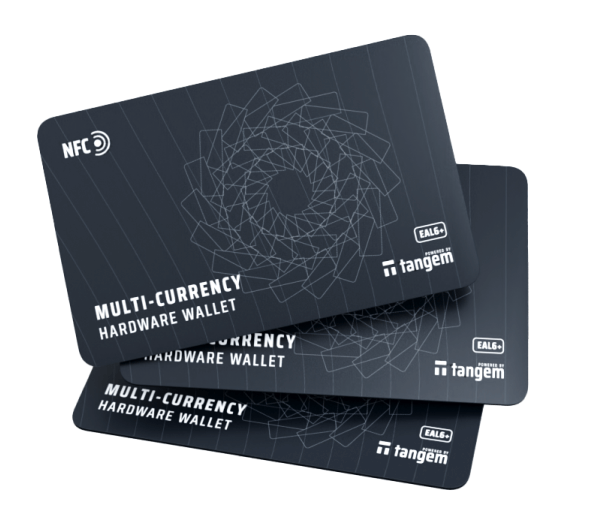
Try one if you want a mobile-first option
If you’re curious about a real-world implementation that follows the smart-card model and invests in audits and provisioning transparency, consider the tangem hardware wallet as an example of how smart-card form factors can be implemented thoughtfully and scaled for everyday use.
This part bugs me
Interoperability is uneven, and that ecosystem fragmentation can be confusing at first. Open standards like NFC-CTAP and standard AIDs help, but adoption in wallets and apps still lags behind hardware advances. Always check ecosystem compatibility, mobile OS support, and the wallet apps you plan to use before committing significant funds. If you’re considering one of these smart-card solutions, read the security whitepapers, look for independent audits, and test recovery procedures with small amounts first so you can validate the vendor claims without risking much capital.
I’ll be honest—
Card-based hardware wallets are not a magic bullet, but they are a promising middle path for many people. They blend practicality with hardware-backed key protection in ways that fit modern mobile habits. If you decide to buy one, do your homework: verify procurement, read the attestation steps, and practice recovery workflows. Okay—so here’s my favorite short takeaway: they can make secure custody feel normal, and for many users that’s the single most important security improvement.
Frequently Asked Questions
Are NFC card wallets as secure as bulky hardware devices?
They can be. Security depends on the chip, secure element certification, firmware signing, and supply-chain controls rather than the thickness of the device, though different form factors shift specific risks so it’s critical to evaluate the vendor’s technical claims and audits.
What happens if I lose the card?
It depends on your setup. If your keys are non-exportable you’ll need the vendor’s recovery flow or a paired device; if you used a seed or multisig scheme, you recover via the standard backup processes. Always test recovery with small amounts first.